

Recent Advances in Function-Enhanced ADCs
Despite the clinical success of antibody-drug conjugates (ADCs), traditional ADCs still face challenges including heterogeneity in target antigen expression, insufficient internalization, payload-mediated drug resistance, and severe treatment-related adverse events. This review focuses on four core directions for next-generation function-enhanced ADCs: bispecific ADC construction, internalization efficiency improvement, binding affinity enhancement, and payload combination innovation.
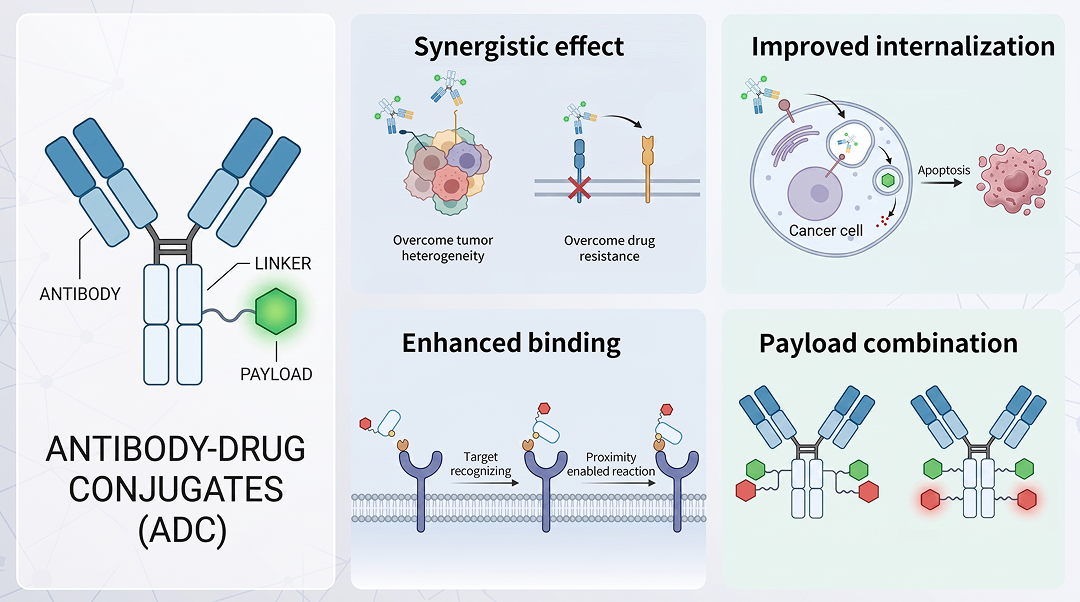
Fig. 1 Current strategies for next-generation ADCs.
01|Bispecific ADCs
Bispecific ADCs (BsADCs) target two tumor antigens or different epitopes of the same antigen, providing new strategies to address tumor heterogeneity and drug resistance.
Representative examples include AZD9592, VBC101, and PRO-1286 targeting EGFR/c-MET, as well as ABBV-969 targeting PSMA/STEAP1. PRO-1286 demonstrated efficient endocytosis and subnanomolar cytotoxic potency across a broad panel of tumor cell lines.
02|Improved Internalization
Endocytosis is a critical step determining ADC efficacy. Strategies to improve endocytic efficiency include biparatopic ADC design, targeting rapid turnover receptors, and the introduction of peptide tags for enhanced endocytosis or lysosomal targeting.
Additional approaches to enhance intracellular delivery include NOTCH3-targeted ADCs, ubitaADCs, and LIPTACs to enhance intracellular delivery.
03|Enhanced Binding
Chemically engineered covalent affinity proteins can form stable and durable covalent bonds with target proteins through a covalent warhead.
SuFEx-based HER2-targeting covalent affinity protein-drug conjugates achieved more than 72% covalent binding and 185% higher cellular uptake than the non-covalent control group. The bispecific covalent affinity protein-drug conjugate AAA-PE24 achieved a 90.4% tumor suppression rate in HER2/EGFR-positive pancreatic tumor models.
04|Payload Combination
Dual-payload ADCs combine two payloads with identical or different mechanisms of action (MOA), providing a strategy to overcome the limitations of single-payload ADCs. Representative combinations include MMAE/MMAF, TOP1i plus RNA polymerase II inhibitor, and TOP1i plus DNA damage response inhibitor (DDRi).
Another strategy is Synergistic Payload-Antibody Ratiometric Conjugates (SPARCs), which enable 2–6 payloads, a total DAR as high as 30, and a tunable payload ratio from 1 to 10.
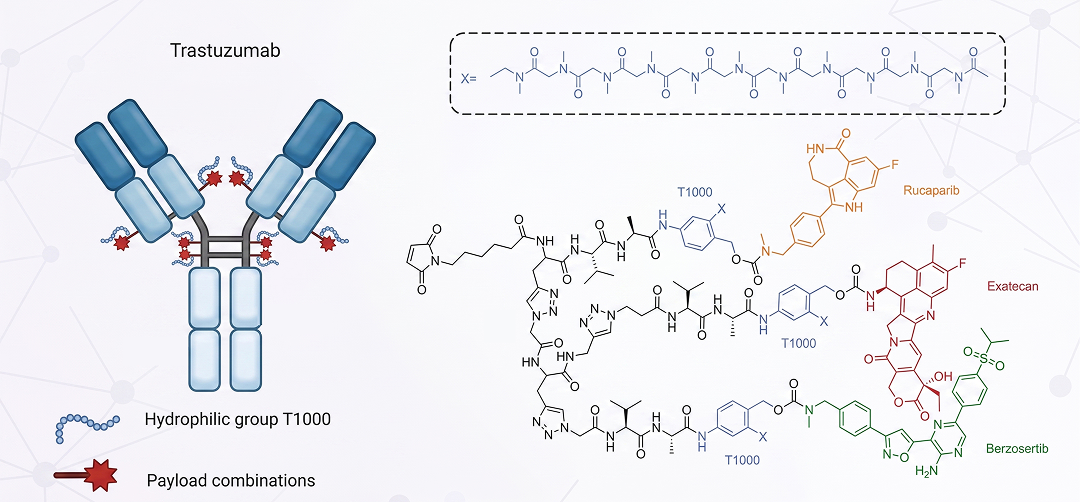
Fig.2 The design of SPARC.
Overall, advances in bispecific ADC construction, internalization efficiency improvement, binding affinity enhancement, and payload combination innovation represent the evolution of ADCs from single-structure entities toward multifunctional, precision-oriented therapeutics.
Reference:
Liu, Xin-tong, Feng Tang, and Wei Huang. "Recent advances in function-enhanced antibody-drug conjugates: Antibody optimization and payload combination." Acta Pharmacologica Sinica (2026): 1-17