
Cell Culture Process Development
In biologics development, cell culture process development is a critical factor that directly influences product quality, yield, and commercial scalability. With the rapid growth of biologics such as monoclonal, bispecific antibodies and antibody-drug conjugates (ADCs), there is an increasing demand for high-density, high-expression, and robustly controlled cell culture processes.
At ChemExpress, we leverage advanced cell culture technologies and deep process expertise to empower biologics innovation—driving efficiency, consistency, and excellence across drug development and manufacturing.

One-Stop Biologics
CDMO Service
We offer comprehensive, full lifecycle solutions encompassing monoclonal, bispecific, and multispecific antibodies, recombinant proteins, and ADCs, building an integrated service platform that covers the entire process from R&D to commercialization.

Expert Scientific Team
Our team of over 200 scientists provides comprehensive support from R&D to commercialization, enabling efficient scale-up and seamless technology transfer,effectively reducing management and transition costs.

Flexible & Efficient
Capabilities
We are equipped with reactor scales of 200L, 500L, and 2,000L, as well as precision instruments such as high-resolution mass spectrometers. Our production capabilities support all stages of drug development (Non-GMP & cGMP).
Our Services
Our platform integrates advanced cell culture and analytical systems, offering effective solutions from process development to large-scale manufacturing. Each production run is executed with precise process control and optimized output.
Our Service Scope Includes
- Multiple Operational Modes: Fed: Batch (FB), Intensified Fed-Batch (IFB), and Perfusion
- Glycosylation Control
- Charge Variant Control
- Polymerization Control
- Medium Screening and Substitution
- Process Change and Comparability Studies
- Scale-down Model & Process Characterization
Why Partner with ChemExpress
High cellular expression
Cell culture offers multiple operational modes—including Fed-Batch (FB), Intensified Fed-Batch (IFB), and Perfusion—with IFB delivering >50% higher productivity compared to traditional FB
Precise Quality control
Based on antibody quality comparability, and other factors, with precise modulation of CQAs such as glycan profiles, purity, charge variants, and impurities, ensuring product quality consistency and compliance with international standards
Scalable Processes
24*3L and 4*15L bioreactors for cell culture process scaling; stable and intelligent purification systems, including ÄKTA pure and Avant, supporting seamless process development and scale-up of antibodies and recombinant proteins from milligram to gram levels
Our Sites
R&D & Manufacturing site
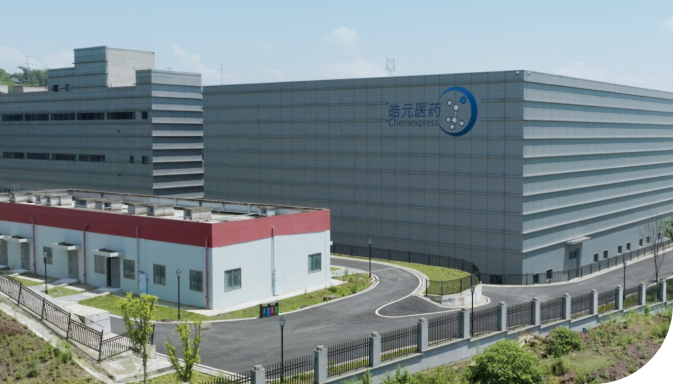
Manufacturing Site
 Monoclonal, Bispecific, and Multispecific Antibodies, Recombinant
proteins, and ADCs Process Development & Manufacturing

Related Services

Purification Process Development
Using ÄKTA Pure and Avant systems, we deliver scalable purification processes for antibodies and recombinant proteins from milligram to gram scale.

Antibody Process Development
ChemExpress can offer comprehensive antibody process development solutions covering cell culture process development, purification process development and formulation process development, enabling rapid, cost-effective, and high-quality antibody production.
FAQs
Cell culture process development refers to optimizing cell growth environments, culture conditions, and techniques in laboratory settings to achieve efficient cell proliferation and production of target products. This process is critical for the development of antibodies, proteins, ADCs, vaccines, and other biologics.
Key approaches to improving yield and quality include:
• Optimizing media composition and feeding strategies to supply essential nutrients and growth factors;
• Adjusting culture parameters such as temperature, pH, and dissolved oxygen to enhance metabolism and product accumulation;
• Selecting appropriate culture systems (e.g., shake flasks, stirred tanks, or single-use bioreactors) to maximize process efficiency;
• Implementing rigorous quality control, including real-time monitoring of cell density, product concentration, and purity.


