
2023 AACR Late-Breaking Research in ADC Field
Last month, AACR annual meeting came to an end in Orlando. Late-Breaking Research is a high-profile session of the AACR Annual Meeting, which mainly showcases the most innovative and clinical potential research in the field of cancer treatment. Let's take a look at some of the late-breaking research in ADC this year.
● Jiangsu Hengrui Medicine
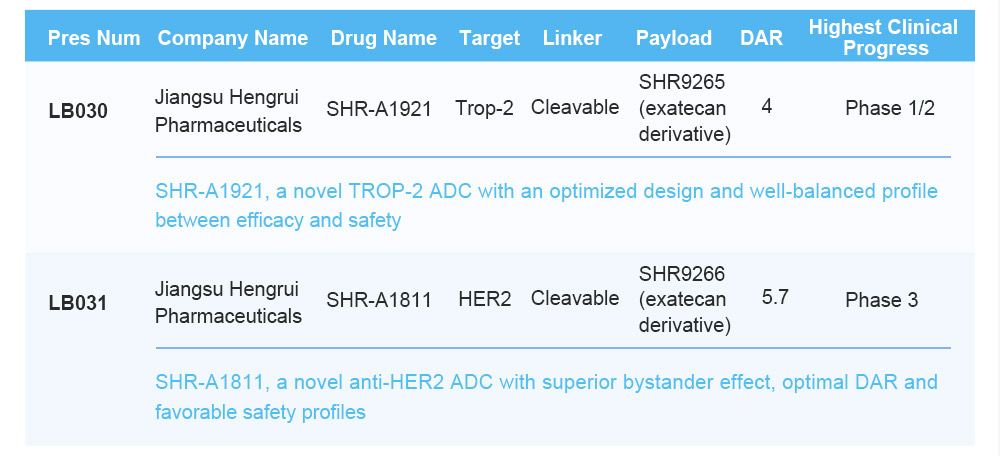
√ LB030- SHR-A1921
SHR-A1921 demonstrated several advantages over other Trop-2 directed ADCs in the field. In summary, SHR-A1921 is a novel anti-TROP2-targeted ADC with a high permeable payload and optimized DAR demonstrating great stability and high potency in both in vitro and in vivo studies. SHR-A1921 also showed compelling efficacy and good safety profile from 50+ subjects of Phase I clinical trial in China (NCT05154604).
√ LB031- SHR-A1811
Current clinical HER2-targeting ADCs, especially T-DXd, have shown strong efficacy in HER2-expressing/mutant cancers, however, with adverse events such as hematologic toxicities and interstitial lung disease (ILD)/pneumonitis. Here presented a potential best-in-class HER2-directed ADC, SHR-A1811, which has demonstrated the best-in-class potential with a highly permeable payload, optimized DAR, great potency and better clinical safety profiles.
● AstraZeneca
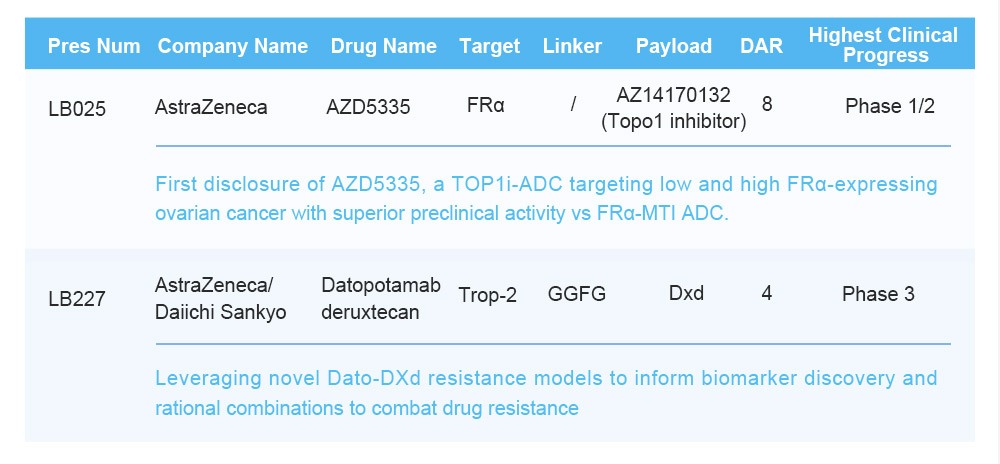
√ LB025-AZD5335
AstraZeneca described for the first time the preclinical activity of AZD5335, an FRα-targeting antibody conjugated to AZ’s proprietary topoisomerase 1 inhibitor (TOP1i) payload, AZ14170132, with a homogeneous drug-to-antibody ratio of 8 and potential benefits vs an MTI-based ADC. The data in preclinical indicate that AZD5335 is a promising therapeutic candidate for the treatment of ovarian cancers across the spectrum of FRα-expression.
√ LB227-Datopotamab deruxtecan
AZ created and investigated novel models of Dato-DXd resistance to characterize resistance mechanisms and identify novel combinations to overcome Dato-DXd resistance. These findings help us refine the mechanism of action of Dato-DXd and shed light on the potential mechanisms of Dato-DXd resistance that may emerge clinically.
● Seagen
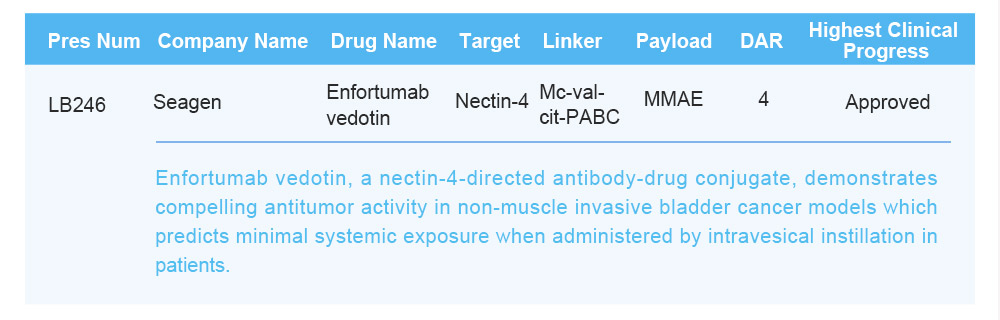
√ LB246- Enfortumab vedotin
Enfortumab vedotin (EV) is a MMAE-containing antibody-drug conjugate directed to Nectin-4, which is approved for the treatment of locally advanced or metastatic urothelial carcinoma. And now they provide evidence that intravesical administration of EV in non-muscle invasive is a promising approach that limits systemic exposure.
● Daiichi Sankyo/ UT MD Anderson Cancer
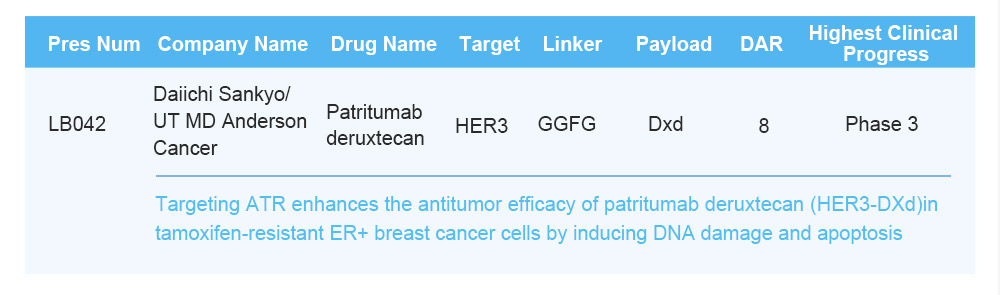
√ LB042- Patritumab deruxtecan
They identified a synergistic partner to maximize its antitumor activity in HER3+/ER+ TMR BC. The combination of HER3-DXd plus ATR inhibitors has therapeutic potential for overcoming tamoxifen resistance in HER3+/ER+ BC.
● Bioray Pharmceutical/ IMMUNWORK
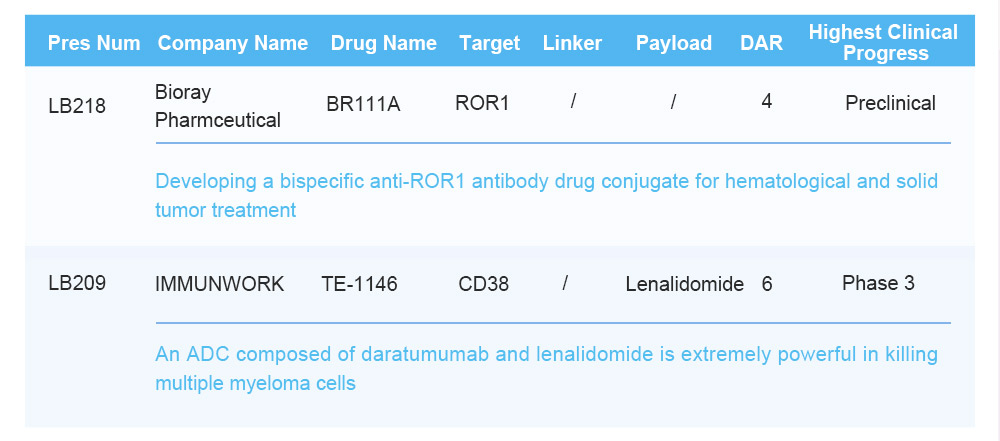
√ LB218- BR111A
In vitro and In vivo studies demonstrated the antitumor activity of anti-ROR1 ADCs outperformed the lead anti-ROR1 ADC currently in phase II/III trial, providing a promising treatment for hematological and solid cancers with a better safety profile and a larger therapeutic window.
√ LB209-TE-1146
TE-1146 is an antibody drug conjugate composed of two therapeutic agents already in use in multiple myeloma, namely, an anti-CD38 antibody, daratumumab, and lenalidomide. The data shows that TE-1146 may be a more effective and less toxic drug than Daratumumab/Lenalidomide combination in treating patients with hard-to-treat multiple myeloma.
● Araris Biotech - Araris Linker Technology
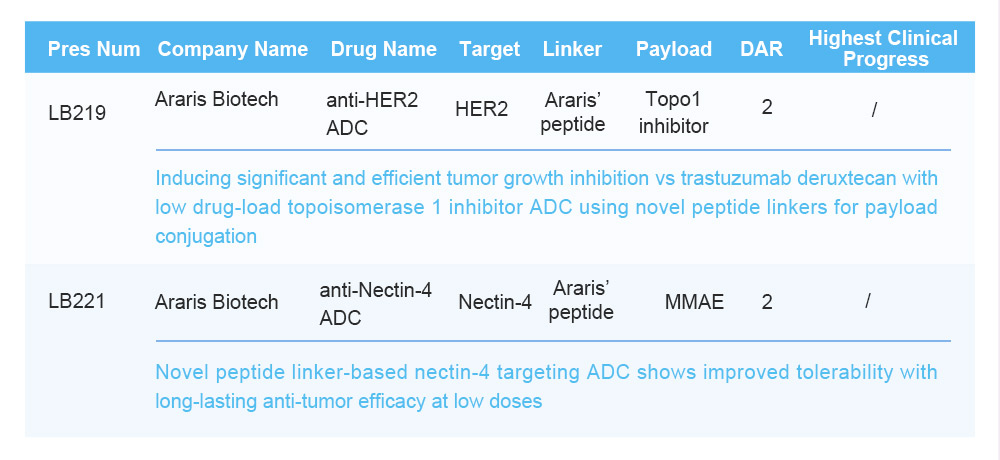
In AACR 2023 Annual Meeting, Araris presented two late-breaking preclinical data on anti-Nectin-4 and anti-HER2 ADCs using the company’s proprietary linker technology. Both ADCs demonstrated improved anti-tumor activity compared to respective FDA approved ADCs in head-to-head in-vivo studies.
● Biocytogen - RenLite® platform
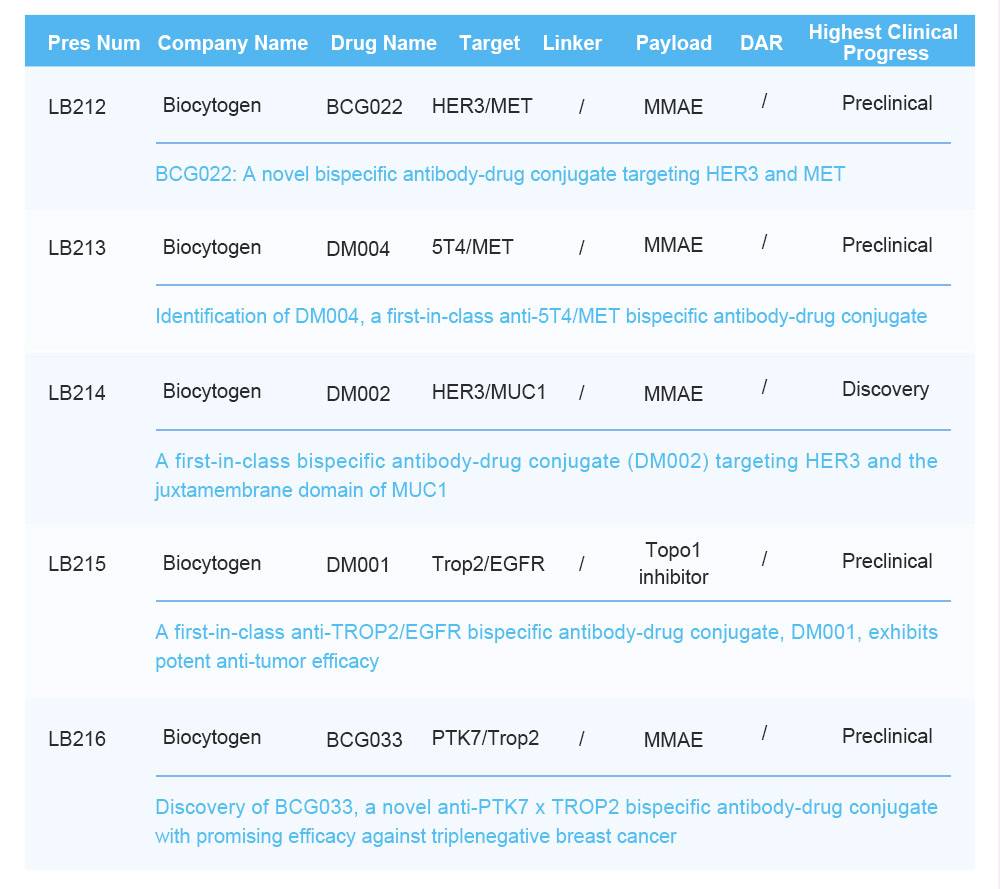
In Late-Breaking Research session, Biocytogen presented 5 fully human bispecific antibody-drug conjugates based on RenLite® platform, which contain the full human heavy chain variable domain with a common human kappa light chain to facilitate downstream bispecific antibody assembly. These 1+1 structured bispecific antibodies have demonstrated enhanced internalization compared to the parental monoclonal antibodies in multiple cancer cell lines.