
Process Safety Laboratory
Process safety assessment is a prerequisite for scale-up manufacturing and a critical step in ensuring stable, uninterrupted production. ChemExpress' process safety laboratory identifies and evaluates potential hazards before scale-up, assesses the likelihood and severity of incidents, and delivers actionable improvement recommendations — helping clients ensure safe, stable production while protecting personnel, the environment, and assets.
With laboratory in Shanghai, our team specializes in thermal safety testing, reaction safety, and process optimization across the full development lifecycle.
Our Service
Our service scope includes:
- Chemical Reaction Safety Risk Evaluation
- Thermal Stability Assessment of Materials
- Material Pressure Risk Assessment
- Reaction Thermodynamics Study
- Reaction Kinetics Study
- Gas Emission Evaluation during Reaction and Quenching Processes
- Evaluation of Compatibility between Reactor Materials and Reaction Materials
- Process Research and Optimization
- Security Consulting & Security Training
Why Partner with ChemExpress
Extensive Project Experience
50% of our core evaluators have over a decade of experience, with 1,500+ safety assessment projects completed and nearly one hundred hazardous processes successfully optimized
Global-Ready Compliance
ChemExpress’ Process Safety laboratory is accredited by CNAS, China’s national accreditation body for conformity assessment, and provides internationally recognized testing capabilities and tailored process safety assessments to identify and control production risks

Comprehensive Coverage
ChemExpress conduct full-scope thermal stability testing and thermodynamic and kinetic analysis across all process materials, covering all major hazardous reaction types including oxidation, nitration, diazotization, azidation, and free radical reactions
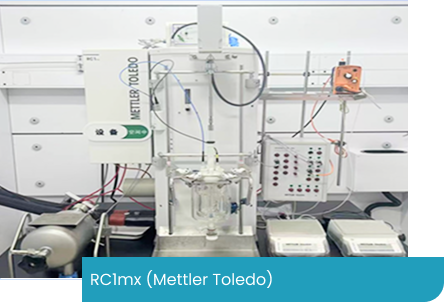
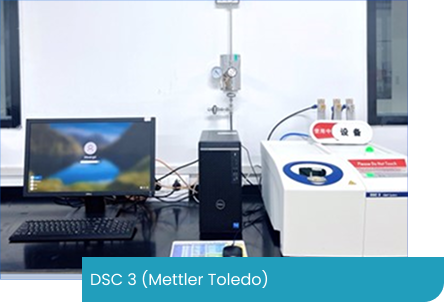
Key Equipment
Case Study
Hydrazine Hydrate Dehydration Condensation
Background: The client's original process used concentrated hydrazine hydrate reacting directly with the substrate under solvent-free conditions. As a high-energy hazardous chemical with a decomposition enthalpy of ~1383 J/g, the process presented critical risks including significant heat accumulation and exothermic product decomposition — resulting in an overall Process Hazard Level 5 (highest).
Achievement: Through systematic process safety assessment, ChemExpress optimized the reaction system, addition sequence, and temperature control. Without compromising product quality, the process hazard level was reduced from Level 5 to Level 2, meeting the safety requirements for scale-up manufacturing.

FAQs
Process safety assessment covers all relevant materials throughout the production workflow, including raw materials, catalysts, intermediates, products, by-products, waste streams, and distillation/fractionation materials, as well as key reaction processes.
The assessment is conducted across five dimensions: decomposition heat, runaway reaction severity, runaway reaction likelihood, risk acceptability, and overall process hazard level, supported by thermodynamic and kinetic analysis.
ChemExpress’ process safety laboratory provides systematic support across all these assessment areas.
ChemExpress' process safety laboratory is equipped with three core thermal analysis techniques, enabling the establishment of a complete evaluation chain from rapid screening to precise quantification:
· Reaction Calorimeter (RC) — Measures key scale-up parameters: heat of reaction (Qr), adiabatic temperature rise (ΔTad), MTSR, specific heat capacity (Cp), and heat transfer coefficient (U)
· Differential Scanning Calorimeter (DSC) — Rapid thermal stability screening; determines decomposition onset temperature and heat release rate
· Accelerating Rate Calorimeter (ARC) — In-depth characterization of adiabatic decomposition behavior; delivers TD24, TMRad, Phi-factor (Φ), and SADT to support storage and scale-up decisions


